
How to Choose the Perfect Wooden Furniture for Every Room in Your Home (Complete Buying Guide)
The process of furniture buying is exciting until you discover that the product does not fit into the space because of size or that the finish is scratched within weeks, or that the furniture just does not fit into the way you live your life. This costly experience happens to people more often than they might think and it all boils down to one problem: selecting furniture based on aesthetics and not practicality.
Furniture selection based on the functional needs of the room is one of the best ways to learn how to select furniture. If you are able to do it the right way, then each purchase you will make will be justified and you will own your furniture for many years to come.
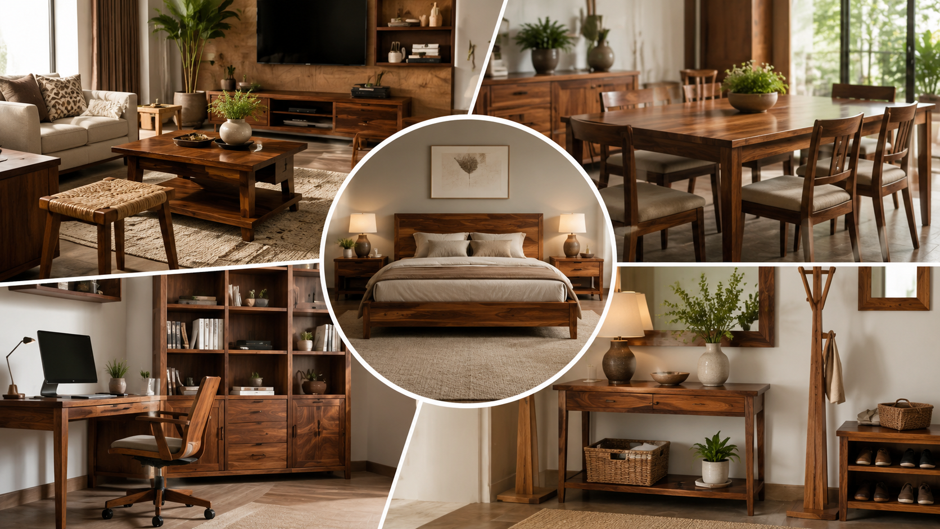
Here is how to go about it step-by-step.
Why Choosing the Right Wooden Furniture Matters
Unlike decoration that is merely looked at as you walk past, furniture is what you sit on, eat off of, sleep in and work from every single day. This regular use explains the importance of taking a bit more time thinking about the choice than looking through product images online.
The comfort level defines whether the chair will be used or not; functionality defines whether the wardrobe will fit your things or just become a place to collect them. Durability defines whether the wooden furniture lasts for ten years or for three decades. Finally, design coordination defines whether the room looks well-thought-through or just put together.
There’s another issue – that of an investment. Quality wooden furniture is worth keeping, as it doesn’t lose value over time but gains character. Bad-quality furniture will definitely be replaced just when you are already comfortable in your new apartment and no longer planning to spend money on new furniture.
How to Choose Wooden Furniture for Every Room
Different rooms place different demands on furniture. Here’s how to approach each one.
Living Room
As living rooms serve as the focal point in homes, proportions play an especially significant role in them. If a coffee table is too big, it will get in the way; if it’s too small, it will look tiny in relation to the sofa.
Begin with measuring the distance between seats – ideally, the coffee table should provide 14 to 18 inches of walkway around it. The same approach applies to the selection of TV stands and console tables: they must be chosen in accordance with their wall position, rather than the size of the TV set alone to hide the wiring and other items out of sight. Folding stools and side tables are good additions to any living room because they offer flexibility of use.
Measure the room or make a drawing before you purchase any pieces of furniture. A simple tip, but it solves the majority of living room furniture mistakes.
Bedroom
The atmosphere in a bedroom needs to be restful, and therefore wooden furniture for bedrooms should focus on comfort and functionality rather than design. For example, a sturdy wood frame that is warm in color gives off more of an air of coziness compared to a cooler material and can withstand the rigors of everyday use without wobbling.
Side tables should be high enough to allow you to reach them easily when lying down in the bed, while wardrobes and dressers should match the storage requirements rather than the look when displayed in the store. If you usually fold your clothes, drawers come first, while hangers come first if you hang most of them.
Dining Room
The dining furniture choice is just as much an issue of household consensus as of aesthetics. Begin with your table’s seat requirements – take note of how many people usually come over to dine, and add another two seats. Too little seating makes everybody crowd each other every time you eat, and too much makes the table feel formal and cold for regular use.
Table shape needs to match room shape, where long rooms get rectangles, and shorter or more angular rooms get round tables, which enable more people to sit around them without having arguments about corners. Since dining furniture undergoes frequent contact with food, drinks, and heat, its longevity is more important here than anywhere else in the house.
Home Office
The home office requires furniture which promotes concentration. A wooden desk ought to have sufficient depth to accommodate the monitor, at an arm’s distance, without encroaching upon the keyboard space while the desk height must enable the arms to remain at 90 degrees while typing.
Shelves and filing cabinets are not simply for books; their purpose is to minimize distractions, as they have a genuine impact on concentration. Ergonomics is more important than aesthetics in this room because any issue such as desk height or lack of chair comfort becomes visible as tiredness by day’s end.
Entryway
The entryway is small, yet it makes the first impression on whoever enters your house. The console table helps in providing you with a place to keep the keys and the letters, the shoe rack makes sure that your shoes do not pile up around the door, and the coat stand makes sure that the chairs will not be used as coat racks anymore.
Best Types of Wood for Different Rooms
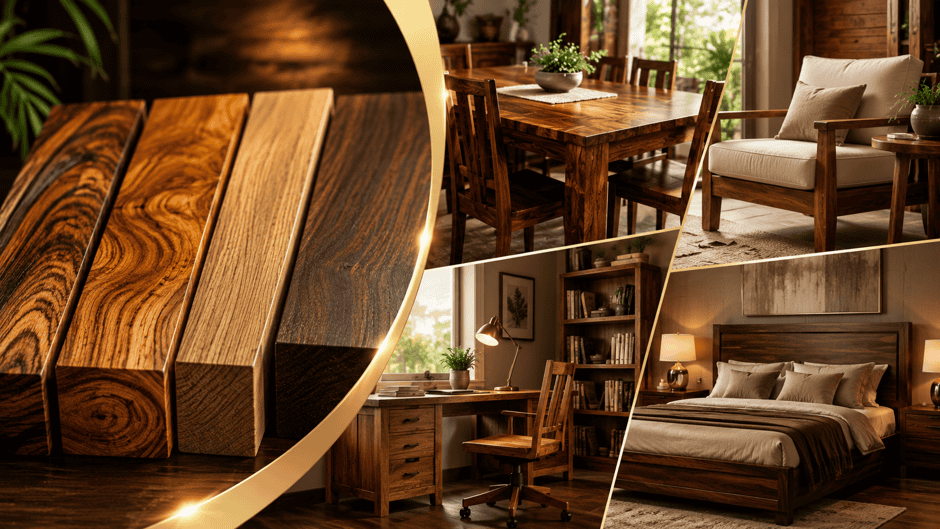
However, all solid wood furniture is not created equal, and choosing the type of wood used can make a huge difference when it comes to style and longevity.
The sheesham wood furniture is very dense and is highly durable because of its rich grain; thus, this type of furniture is very well suited to dining tables and living room furniture that gets frequent usage. The furniture made from such wood is relatively inexpensive compared to other high-quality hardwoods.
Teak has the ability to repel moisture and insects due to natural oils found in the wood. This makes it highly durable in humid environments as well as areas close to windows or balconies. Teak ages very well, developing a silvery brown color if it remains untreated, but if regularly oiled, the color remains golden.
Oak is known for its lighter grain pattern and is very versatile. The furniture is very durable and can easily withstand wear and tear.
Walnut offers a deep, luxurious tone that instantly elevates a room, often used in premium wooden furniture and statement pieces like bed frames or dining tables. It costs more, but its appearance and durability justify it for buyers wanting a long-term, luxury furniture centerpiece.
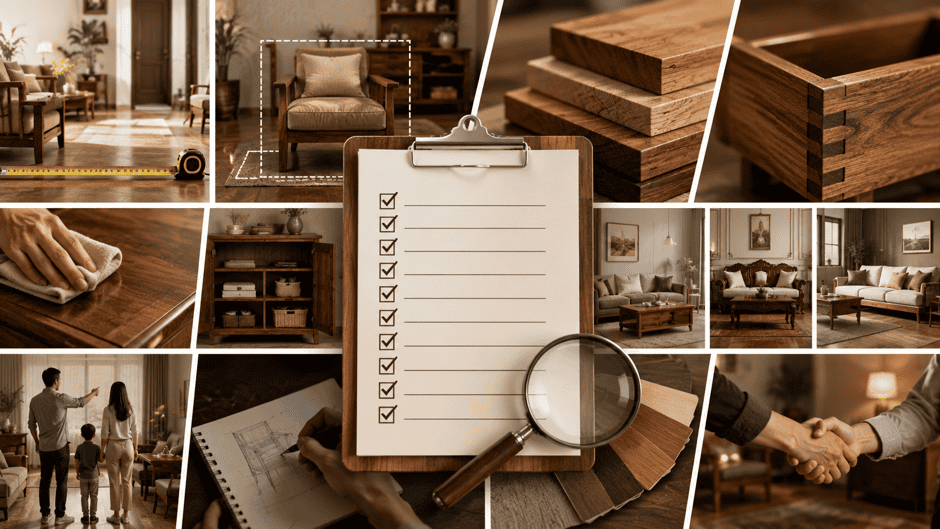
Wooden Furniture Buying Checklist
Apply this list of criteria before finalizing any purchase:
• Take measurements of your space, including doorways and hallways furniture would be carried through.
• Avoid oversized furniture; scale it according to room dimensions.
• Purchase solid wood instead of veneer or particleboard if you require a sturdy piece.
• Craftsmanship and type of joining should be examined; dovetail and mortise-and-tenon joints last longer than glued or stapled ones.
• Take into consideration finish quality; there shouldn’t be any areas that are too rough.
• Determine storage capacity based on your possessions.
• Make sure furniture will fit into your interior style.
• Think ahead; maybe, later you would need more capacity for your growing family or your home office.
• Inquire about customization possibilities regarding size, finish, and wood type.
• Buy from reputable furniture manufacturers who have good reviews and warranty policy.
Common Mistakes Buyers Make
Purchasing on looks alone. A beautiful design does not always make a suitable purchase. Solution: ensure functionality and dimensionality before getting caught up in aesthetics.
Neglecting measurements. This is the most frequent mistake made. Solution: take double measurements, including doors and stairwells for delivery purposes.
Selecting low-quality materials. Lower quality materials generally result in having to replace furniture in just a few years. Solution: invest in solid wood furniture instead of composite pieces for frequently used items.
Neglecting maintenance needs. Some materials require occasional oiling and polishing. Solution: inquire about maintenance needs before purchase.
Oversizing furniture. Larger does not always equate to better. Solution: use painter’s tape to mark off dimensions on your floor first.
Overlooking craftsmanship. Poor craftsmanship leads to failure before the wood even deteriorates. Solution: examine joints and ask about construction details.
Failing to verify guarantees and after-purchase service. Problems arise after several months. Solution: inquire about warranty options beforehand.
Why Handmade Wooden Furniture Is Worth the Investment
Handcrafted furniture is made with a degree of craftsmanship that cannot be matched by mass-produced furniture. This is because each join is handmade, each grain is individual, and what you end up with is a piece of furniture that is truly unique and not an exact replica produced on the assembly line.
It also means that such furniture is durable, as the joinery will last much longer than the joints stapled together by machines. Handcrafted furniture is also more environmentally friendly, since craftsmen use sustainable wood and do not create as much wastage as mass-production furniture factories do.
Ultimately, you get not only furniture, but an item that becomes part of your home’s history and gains value as it ages.
Conclusion
The best choice of wooden furniture is based on a very straightforward rule – functionality before aesthetics. Get to know the dimensions of your room, understand what each item will be used for and find suitable wood. And do not forget that quality work should take precedence over everything else.
When it comes to finding quality furniture that is made with attention to detail and dedication, then Hania Handicraft can offer you unique pieces of handcrafted wooden furniture that are exactly the kind described in this guide.
Frequently Asked Questions
1. What is the best type of wood for everyday furniture?
Sheesham wood is a popular everyday choice because it’s dense, durable, and affordably priced compared to teak or walnut, making it well-suited to dining tables and living room furniture that see daily use.
2. How do I know if furniture is solid wood or veneer?
Check the edges and undersides of a piece — solid wood shows consistent grain all the way through, while veneer reveals a different material or particleboard beneath a thin wood layer, especially visible on cut edges or drawer interiors.
3. How much should I spend on wooden furniture?
Spending depends on the piece and wood type, but investing more in high-use items like dining tables and bed frames tends to pay off through longevity, while smaller accent pieces can be more budget-friendly.
4. Is handmade wooden furniture really better than factory-made?
Handmade furniture generally offers stronger joinery, unique grain character, and better long-term durability, since artisans fit joints by hand rather than relying on machine assembly and staples.
5. How do I choose furniture size for a small room?
Measure your room’s usable floor space first, leave at least 14–18 inches of walking clearance around major pieces, and choose furniture with a smaller footprint or multi-purpose function, like a console table that also offers storage.