
Wooden Stool vs Wooden Chair: Which Is Better for Your Home?
Although a wooden stool and a wooden chair might seem like two very similar solutions to the same problem, they are, in fact, not alike at all. While the former is portable, lightweight and occupies little space, the latter features back support and arm rests and is intended for more extended periods of use. What will be the better choice between the two will depend on the duration of time spent seated, the location, amount of available floor area, as well as the style of other furniture in the room.
This guide offers an analysis of the differences in terms of the criteria that influence purchasing decisions such as comfort, ergonomics, size, height, durability, maintenance and value of money.
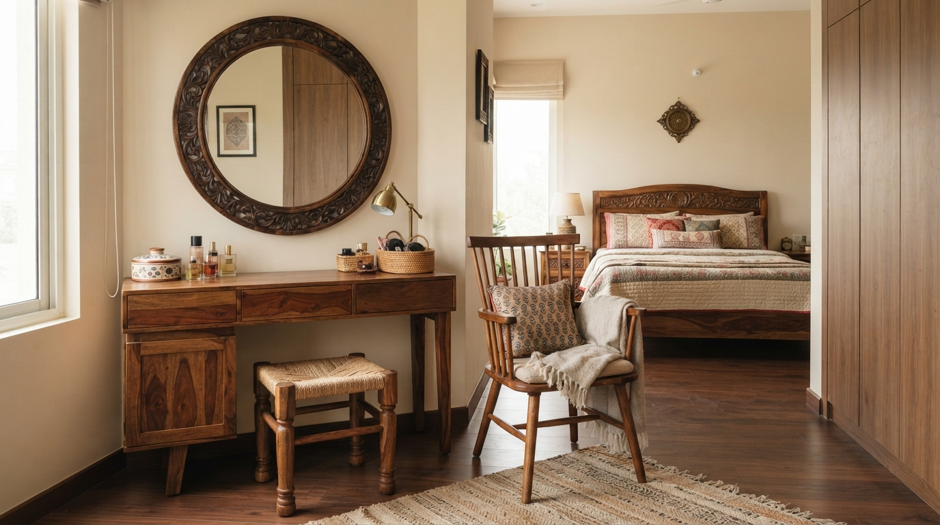
Wooden Stool vs Wooden Chair: What’s the Difference?
The distinction is in the structure. The stool has a seat, legs, and sometimes a footrest or a stretcher. In the case of the chair, there is an addition of a backrest and armrests.
Backrest is what makes the process of sitting different. The center and the lower back area support a person sitting on a stool. When it comes to a chair, the backrest helps to support the body weight. Most other features can be easily derived from this main one, including comfort, size, appearance, and construction of each furniture item.
There are more elements and joints used in the construction of a chair, and, consequently, it requires more careful work. As for the stool, it has fewer elements and, therefore, is easier to construct.
Wooden Stools: Where They Work Best
Space saving seat. The stool takes up minimal space, and many are designed to tuck beneath tables, consoles, and dressing counters. This makes all the difference in a compact living space, particularly an apartment with limited space and bedroom filled with bed and wardrobe.
Multi-functional use. The same stool will come handy as additional guest seating space, ladder to reach a higher shelf, place for changing footwear, or as surface next to the bed. The absence of a back makes it possible to sit at any side of the table and hide the stool between uses. The chair being directional cannot be used in such a way.
Decorative value and craftsmanship. Hand carved, turned or inlaid stool brings much decoration into a compact object that looks fine in both traditional and modern Pakistani interiors. It may also be used as a decorative element in a small amount without making the space look cluttered.
Short-term seating. The stool is great for brief moments of work or relaxation – doing make-up, tying shoes, having tea at the counter, or seating by the bed to chat. For long periods of time, the lack of back makes the chair uncomfortable to sit on.
Wooden Chairs: Where They Work Best
Back support. The backrest is a structure that helps rest the spine against it. It plays an essential role in the comfort of any person who sits for longer than 20 to 30 minutes at once, making it the key reason why chairs became a norm in dining rooms and offices.
Extended sitting. Dinner, homework, reading, working from home and family time require long periods of sitting. In this case, the chairs with slightly inclined backrest and seat of adequate depth become more comfortable.
Seating for dining and everyday use. When choosing a seat that will be used every day by multiple persons, a chair would be a better option. Armchairs and carvers would be helpful for elderly members of the family who find it easier to stand using armrests.
Comfort and practicality. Comfortable wooden chairs have to be comfortable due to their design, not only because of their cushions. Properly contoured seat, angle of the backrest and proper seat height are more important than having padded cushions. A flat and vertical wooden chair would be uncomfortable, whereas a properly designed one could providecomfort for hours.
Wooden Stool vs Wooden Chair: Key Differences
| Factor | Wooden Stool | Wooden Chair |
| Comfort | Good for short sessions | Better for long sitting |
| Back support | None | Yes, varies with backrest design |
| Space needed | Small, often tucks under surfaces | Larger footprint and more clearance |
| Versatility | High: seat, step, side table | Mainly seating |
| Durability | Simple structure, fewer joints to fail | More joints, so build quality matters more |
| Style | Accent piece or compact decorative seat | Defines the look of a dining or work area |
| Maintenance | Simple to clean and check | More crevices and joints to dust and inspect |
| Price/value | Usually lower cost per piece | Usually higher, with more material and labour |
| Best use | Dressing area, bedside, counters, extra seating | Dining, desk, daily and long sitting |
A few of these points deserve more than a table cell.
Height. Normally, standard chairs for diners are 45 cm in height, made to work well with the 75 cm tall table. Stools vary in height more significantly; low stools fit well for dressing purposes and for use as footrests, counter stools tend to be 60 to 65 cm in height, and bar stools are typically 75 cm high. What consumers do wrong all too often is that they don’t take into account what the seat is going to be used on. A good rule of thumb here is 25 to 30 cm of space.
Durability. Neither of them is inherently stronger than the other one. The strength of the furniture is dependent upon the quality of the wood used, how the joints were assembled, and how well they are finished. Furniture pieces that are assembled using joints that use glue, dowels, and mortise-and-tenon joints can be expected to last longer than those using nails and screws.
Maintenance. Both require regular cleaning and occasional wiping with a lightly dampened cloth. Wood reacts to moisture conditions: in areas where it is humid or near the sea, wood swells a little; while in areas that are excessively dry, it gets dried up and forms cracks. Wooden furniture should be kept away from sunlight and moisture from the wall and floor.
Price and value. Stools tend to be cheaper on an individual basis since they require less wood and labor. However, while a set of dining chairs may be more expensive than four stools, it is important to realize the frequency and duration of usage of a particular item in order to establish its real value.
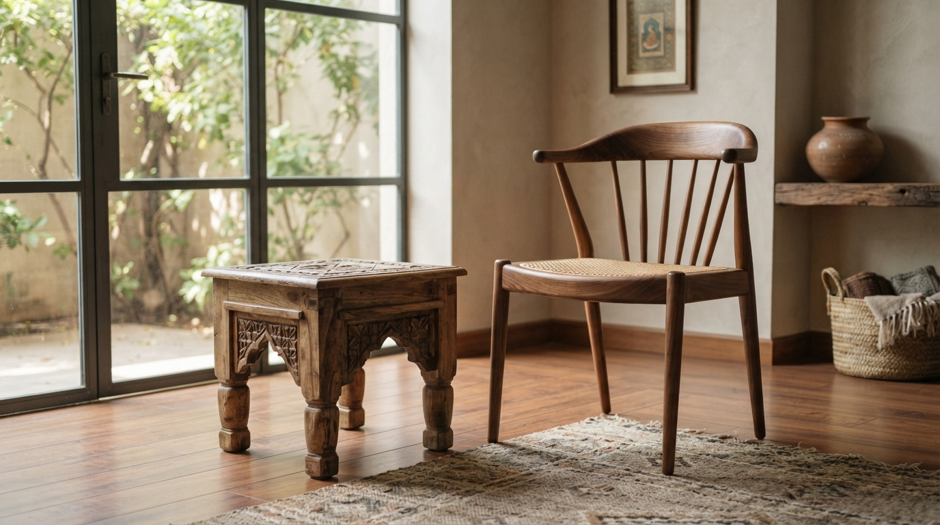
Which Is Better for Different Rooms?
Living Room: Chairs are best for talking spots and people who have to sit for a longer period. Stools serve well as additional seats that can be brought out in case of guests and stowed away afterward, which is helpful for small living rooms where seating furniture might take up too much space.
Bedroom: In most cases, a stool is more appropriate. It occupies the spot near the bed, at the foot of the bed, or in the corner without taking much space. The case for a chair is relevant when there is enough space for a reading spot.
Dressing Area: Stool is the right choice for a dresser or vanity, particularly one that slides completely underneath the table surface. In case one spends more time in the area, then a stool with an ergonomic seat and height of the table should be selected.
Dining space. Stools should be chosen for family dining if they do not have many visitors as it is more comfortable to eat in the seat with back support, especially during a lengthy dinner. Stools could be used on the breakfast counter or in the kitchen island, but not as an option to chairs for the main dining table.
Balcony. Being lightweight, stools are easy to transport and store, but the furniture made from natural materials would be destroyed by rain and sunshine. Therefore, depending on how the balcony is designed, either could be chosen. But if it is exposed, all wooden pieces should be stored when they are not needed.
Limited space. The winning option for the small apartment or studio is the set of two stools, which could be used for dining, getting dressed and for extra seats, one chair to sit comfortably in.
What Should You Consider Before Buying?
Size and Proportion. Verify that the seat width and depth match those of the intended user group. While an average size of around 38 to 45 cm width is suitable for most adults, a taller person can require some extra seat depth. Verify that the item is proportionate to its space, with enough clearance for pulling it out.
Height. Verify that the seat height matches the surface it will rest on, as discussed above. If it is a stool, verify if it has a footrest; otherwise, a higher seat becomes leg-straining.
Material. Verify which wood type the item uses. Different wood types have different densities, textures, and reactivity to moisture. Any store like Hania Handicraft or even any other shop should be able to identify the wood type used, so verify. Do not trust general descriptions like “pure wood”.
Construction quality. Inspect the joints, not only the surface. Well-fitted joints, no gaps, and legs firmly connected to the seat are positive factors. Try gently rocking the furniture. Any noise or looseness in the showroom will only worsen over time.
Stability. Position it on a flat surface and inspect whether all legs are in contact evenly. If a stool rocks a little bit on an even floor, it won’t be any better at home. As for chairs, pay attention to the joint of the backrest as they receive the most strain when you recline.
Finish. A proper finish will protect the wood and must be smooth without sticky spots. Ask whether the finish is appropriate for the particular room as some finishes are better suited for kitchens, balconies, and kids’ rooms. Rounded edges are safer and more comfortable than sharp edges.
Comfort. Sit in it, or ask for precise measurements if you are buying online. Consider the form of the seat, backrest angle and edges. If prolonged seating is expected, try longer than a minute.
Weight Capacity. Furniture made out of wood does not always have weight capacity mentioned. If you need that information for your family, ask about it directly from the seller, because you can only consider their answer to be an indication.
Use. Make notes about how you are going to use that piece of furniture. There are various ways to use the same furniture – everyday dining, temporary guest sitting, and bedroom sitting place.
Handmade Wooden Stools and Chairs: Why Craftsmanship Matters
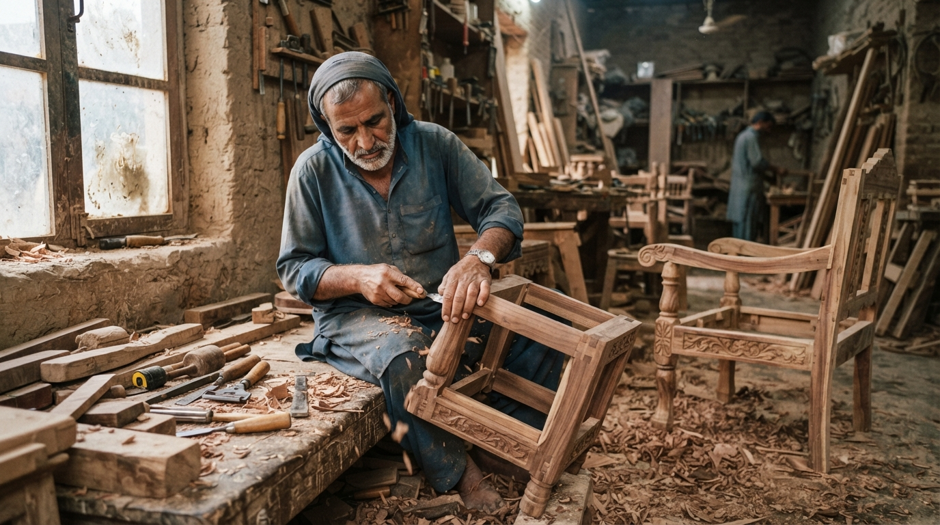
The fact that it is handmade does not necessarily make it better. However, the process entails a person making decisions regarding the product in every step of production from selecting the wood to joint cutting, shaping and sanding of the surface as well as the application of the finish. Such processes result in products that can be repaired and refinished, and which come with features like carving, turning or hand-sanding that cannot be attained in machine manufacture.
In addition to the aesthetic benefit, there are other benefits to this process. The furniture can be customized as far as its finish and size is concerned. Also, traditional joints do not have to be replaced but repaired. Due to individualized finishing of each piece, variations are expected. This should be taken into account especially if you require matching sets.
It is understood that Handicraft Hania produces wooden furniture that takes the form of stools and chairs, and that their collection of products is suitable for those who want seating furniture of traditional charm. Should there be a need for comparing products, we request that you ask for information on the kind of wood, joints, and finishes of each product.
Wooden Stool or Wooden Chair: Which One Should You Choose?
A wooden stool would be suitable if you have limited space, you need a functional seat, you require an accent seat, or you do not spend much time sitting down.
If you spend time sitting down, eat from the table, work from a desk, or sit down elderly members of the family, a wooden chair would be ideal for you. When your requirement is of comfort rather than functionality, the wooden chair becomes a safer choice.
Most homes end up requiring both chairs and stools. The optimum combination would consist of chairs where people sit down, and stools for all other purposes. Start by finding out how you are going to use the furniture, measuring the space it will take up, and then finding out how well-built it is. This sequence will lead to a choice faster than just comparing designs.
FAQs
Q1: What is the main difference between a wooden stool and a wooden chair?
- Answer: The primary difference lies in the backrest and structure. A wooden chair is designed with a supportive backrest and armrests for extended sitting, making it ideal for dining and work. A wooden stool is backless, compact, lightweight, and versatile, making it perfect for short sitting sessions, vanity desks, or space-saving extra seating.
Q2: Which is better for small apartments: a wooden stool or a wooden chair?
- Answer: A wooden stool is generally the best choice for small apartments and compact rooms. Because stools do not have backrests, they can easily tuck completely under tables, counters, or vanity desks when not in use, saving valuable floor space.
Q3: Can I use wooden stools instead of chairs for my dining table?
- Answer: While low wooden stools can be used as temporary dining seats, solid wood dining chairs are strongly recommended for daily meals. Dining chairs provide essential back support and ergonomic comfort for sitting through 30- to 60-minute family dinners. Stools work best at kitchen islands or breakfast bars.
Q4: What is the ideal seating choice for a dressing table or vanity?
- Answer: A handcrafted wooden vanity stool is usually the top choice. It offers the exact height needed for makeup and grooming while sliding completely underneath the vanity mirror table to keep the bedroom neat and clutter-free.
Q5: How do I choose the correct seat height for a wooden chair or counter stool?
- Answer: As a general rule, there should always be a 25 to 30 cm (10–12 inches) gap between the top of the seat and the underside of the table. Standard dining chairs have a seat height of 45 cm for 75 cm tables, while counter stools are 60–65 cm high, and bar stools range around 75 cm.
Q6: Why should I invest in handmade wooden stools and chairs?
- Answer: Handmade wooden furniture features superior craftsmanship such as traditional mortise-and-tenon joints, hand-carved detailing, and custom finishes. Unlike factory flat-pack items, authentic handcrafted wooden pieces can be easily repaired, polished, and last for generations.
Q7: Are wooden stools as durable as wooden chairs?
- Answer: Yes. In fact, because wooden stools have a simpler design with fewer joint connections, they often face less structural strain than chairs. However, overall durability depends on using premium hardwood (like Sheesham/Rosewood or Teak) and quality joinery rather than simple nails and screws.
Q8: How do I clean and maintain solid wood furniture in humid or dry weather?
- Answer: Dust your solid wood stools and chairs weekly with a soft, slightly damp microfiber cloth. Keep wooden items away from direct sunlight and wet walls to prevent cracking or swelling. Applying a natural wood wax or polish once a year will maintain the wood’s natural shine and finish.
Q9: Can a wooden stool be used as home decor?
- Answer: Absolutely. Decorative, hand-carved, or brass-inlaid accent wooden stools can double as side tables next to sofas, bedside plant stands, or artistic corner displays, especially in traditional Pakistani and modern fusion home interiors.
Q10: Where can I buy authentic handcrafted wooden chairs and stools in Pakistan?
- Answer: You can explore premium collections of authentic handcrafted wooden furniture, traditional stools, and carved chairs online at Hania Handicraft, known for exquisite traditional craftsmanship, durable wood quality, and timeless designs.