
Handmade Furniture vs Factory-Made Furniture: Which One Is Better for Your Home?
Selecting furniture should not be limited to occupying any empty space. It should take into account the texture of the furniture that you purchase, its durability, and also how it will look like after ten years.
Two types of furniture can be seen all over the market; these include handcrafted furniture and manufactured furniture.
This manual will explain the difference between the two types in terms of their craftsmanship, quality of wood used, durability, and costs involved.
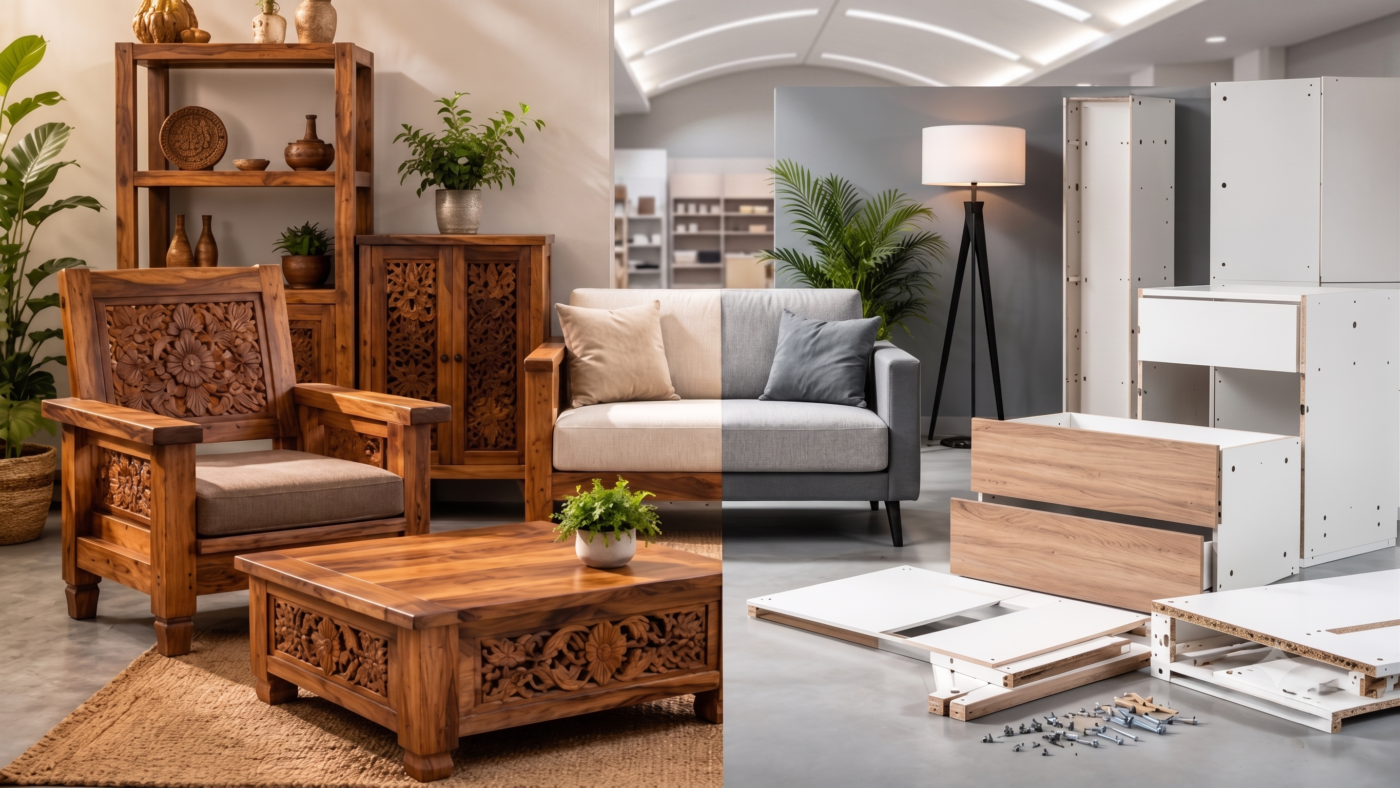
What Is Handmade Furniture?
Craft-made furniture is constructed by experienced crafters utilizing conventional craftsmanship skills. The construction, assembly, and finishing of each piece of craft furniture is mainly done by hand, with the assistance of simple power equipment and not factory automation systems.
The manual manufacturing process helps crafters examine the wood structure, correct errors and make necessary changes for a better connection. Craft furniture pieces are normally custom made because people can request a customized furniture piece according to their needs.
What Is Factory-Made Furniture?
Factory-produced furniture is mass-produced by machines from standard designs. The manufacturers care about production speed and uniformity; hence, their products remain cheap and in ample supply.
The majority of factory-produced furniture is made of engineered wood, particleboard, or veneers attached to composite cores instead of being constructed of solid wood furniture.
Handmade vs Factory-Made Furniture: Comparison Table
| Feature | Handmade Furniture | Factory-Made Furniture |
| Material | Solid wood furniture, hand-selected grain | Often particleboard, MDF, or veneer |
| Craftsmanship | Hand-joined, individually finished | Machine-assembled, standardized |
| Durability | Built to last decades with proper care | Shorter lifespan, especially under daily stress |
| Customization | Fully customizable sizes and finishes | Limited to existing product lines |
| Price | Higher upfront investment | Lower initial cost |
| Uniqueness | One-of-a-kind, natural wood variations | Identical units, mass-produced look |
| Repairability | Easy to repair or refinish | Often difficult or uneconomical to repair |
| Sustainability | Can use responsibly sourced timber, less waste | Frequently uses composite materials and adhesives |
Why Wood Quality Matters More Than People Think
It is the type of wood employed that dictates how the furniture ages. For example, solid wood expands and contracts due to changes in moisture, but the craftsman takes this into consideration when making the furniture.
For composite materials such as veneers and particleboard, however, they age differently because the veneers will peel off, and the particleboard will expand and disintegrate if exposed to moisture.
That explains why quality wooden furniture uses finishers such as oils and sealants to ensure that the grain of the wood ages well. Factory finishes, on the other hand, are usually sprayed.
Durability: Why Handmade Furniture Often Lasts Longer
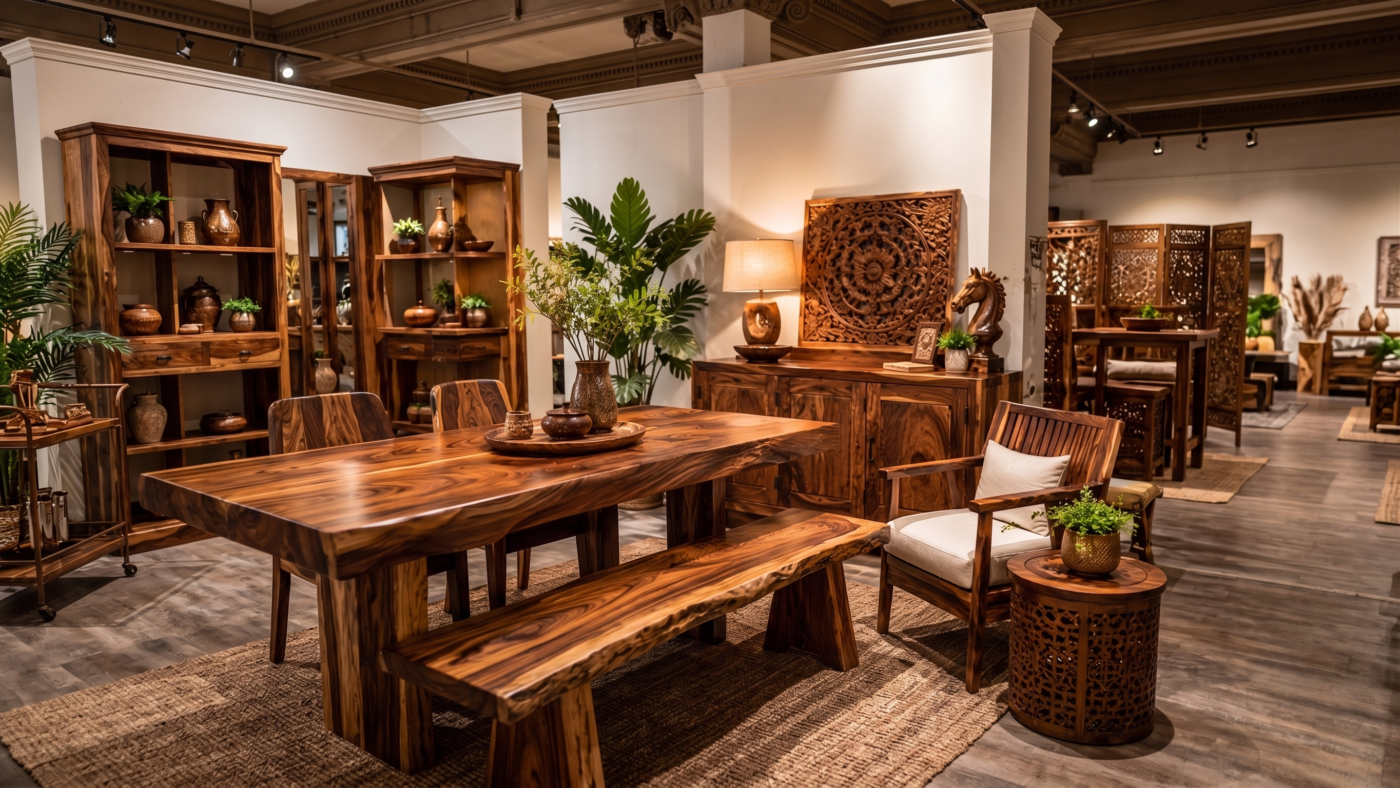
The quality of durability can be attributed to how the item is built, the materials used, and attention to details. Hand-made items usually employ joint methods such as the mortise-and-tenon and dovetail joints that bear weight and stresses better than glued or stapled joints used in manufacturing processes.
Hand-made furniture will last longer because unlike manufactured furniture, which is made of particleboard and other types of manufactured materials, hand-made furniture can withstand sanding and refinishing several times in its lifetime.
Nevertheless, hand-made furniture needs regular maintenance, such as protecting it from excessive moisture and use of coasters/pads.
Sustainability Considerations
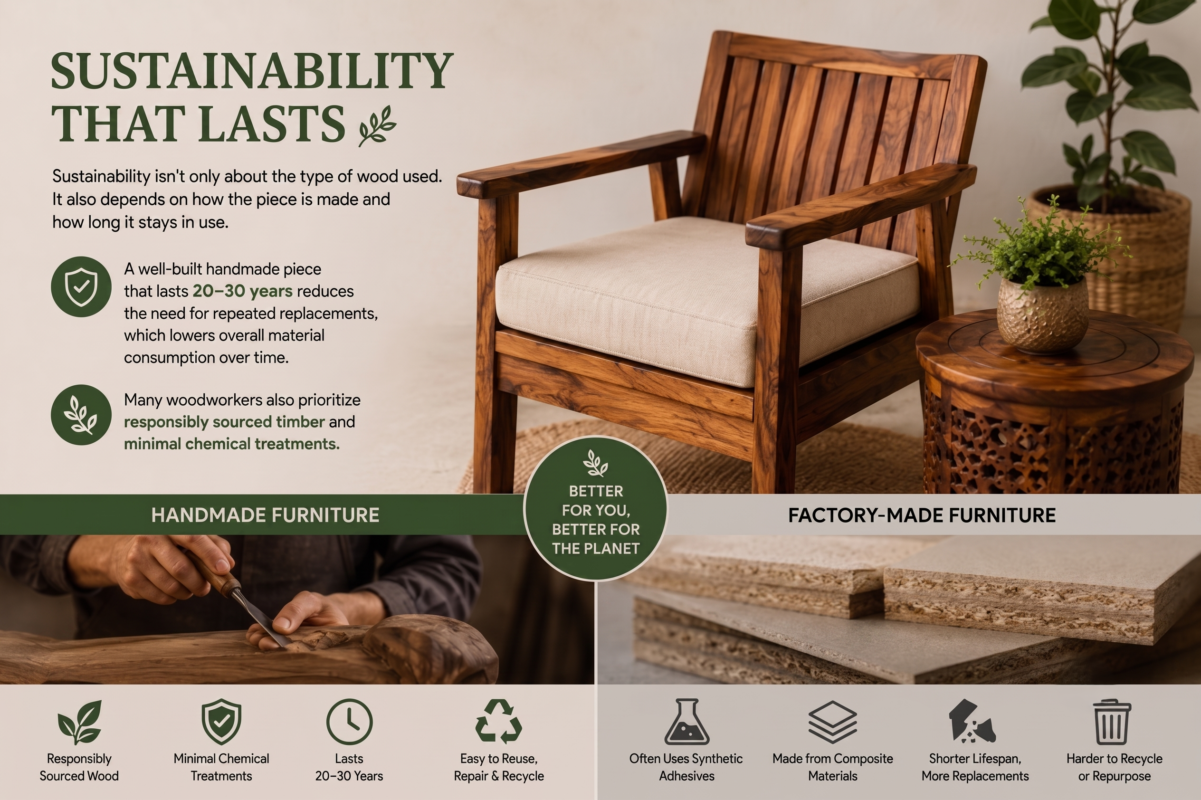
Sustainability is not just about the kind of wood that is used but also about how the item is manufactured and how long it will last in use.
A good quality handmade item, which can last for 20-30 years, means less frequent replacement, thereby reducing total material usage over time. Woodworkers are known to be mindful of sustainably harvested wood and low chemical content.
Manufacturing in factories is highly efficient but makes use of artificial adhesives and composite panels that are not easy to recycle or reuse.
Pros and Cons
Handmade Furniture
Pros:
- Made from solid wood with visible grain and character
- Stronger joinery built for long-term use
- Fully customizable to fit your space
- Easier to repair and refinish over time
Cons:
- Higher upfront cost
- Longer production and delivery time
- Fewer instant “off-the-shelf” options
Factory-Made Furniture
Pros:
- More affordable initial price
- Widely available and ready to ship
- Consistent, predictable design
Cons:
- Shorter functional lifespan
- Limited customization
- Harder to repair when damaged
Furniture Buying Guide: What to Check Before You Buy
1. Inspect the material. Ask whether the piece uses solid wood or composite boards.
2. Check the joinery. Look underneath or inside drawers for glued staples versus interlocking joints.
3. Ask about the finish. Natural oils and sealants tend to age better than sprayed lacquer.
4. Request customization options. A reputable maker of custom furniture should accommodate size and finish requests.
5. Compare warranty and repair support. Handcrafted pieces often come with better after-sales support for repairs.
Common Mistakes to Avoid When Buying Furniture
- Choosing based on price alone. The cheapest option often costs more in replacements over time.
- Ignoring wood type. Not all “wood furniture” is solid wood; many labels use veneer over composite cores.
- Skipping measurements. Custom pieces solve fit issues that off-the-shelf furniture can’t.
- Overlooking maintenance needs. Even durable furniture needs occasional care to last.
- Not asking about sourcing. Responsible sourcing affects both quality and environmental impact.
Handmade or Factory-Made: Which Should You Choose?
Factory-furniture is a viable option if speed and cost-efficiency are your priorities in the search for a temporary furniture solution.
In case your furniture items are supposed to serve you for many years and you prefer good quality and craft work of furniture, handmade furniture might be the better long-term option.
Final Thoughts
However, both handcrafted furniture and manufactured furniture have their own role in the market. This all depends on your budget, time frame, and how long you want the product to serve you.
For those customers or interior designers who prefer to go for solid wood furniture, quality workmanship, and products that should survive generations, then no one can deny the benefits of going for handcrafted products.
When it comes to high-end wooden furniture manufactured using classic techniques and genuine wood, then Hania Handi Craft is there to cater to your needs.
FAQs
1. Is handmade furniture worth the extra cost?
Yes, for most buyers. Handmade furniture typically lasts longer and can be repaired or refinished, which offsets the higher upfront price over time.
2. How can I tell if furniture is made from solid wood?
Check the weight, grain pattern consistency, and edges. Solid wood shows continuous grain, while veneer often reveals a different material underneath at the edges or joints.
3. Does factory-made furniture always use lower-quality materials?
Not always, but many factory pieces use composite boards and veneers to reduce costs, which can affect long-term durability compared to solid wood.
4. How long does handmade furniture typically last?
With proper care, handcrafted solid wood furniture can last 20 to 30 years or more, and often longer with occasional refinishing.
5. Can factory-made furniture be customized?
Customization is usually limited to color or fabric choices, unlike handmade furniture, which can be built to specific dimensions and design requests.